Ladislav Sutnar (American, b. Czechoslovakia, 1897–1976) is from United States.

We have 20 objects that Ladislav Sutnar has had a hand in. Here's the break-down:

These are a couple of those things by Ladislav Sutnar in our collection:


Cooper Hewitt

Ladislav Sutnar , bohemian painter and advertising, display, and industrial designer. He studied at the School of Industrial Arts and at the Technical University and at the Charles University in Prague. At the early age of 26 Sutnar became a professor of design at the State School for Graphic Arts, also in Prague. A pioneering designer, he worked as a painter and stage designer, becoming one of the most notable exhibition designers of the 1930s. His most important designs included 1930-1932 glass drinking set, 1928-1932 china table set, and cutlery. In 1930 Sutnar produced designs for porcelains dinnerware and, in 1931, heat-resistant cups, tea sets, and containers for Schone Stube in Prague. As the exhibition architect of the Czechoslovak government, he was chief designer of the Czechoslovak Hall at the Czech pavilion at the 1939-40 "New York World's Fair". Arriving in the United States in 1939, he embarked upon a prolific career comprising typography, packaging, and advertising and exhibition design. In 1941 he became art director, coordinator and designer of the format of "Sweet's Files", a set of annually updated catalogues of industrial and architectural products. Sutnar showed designers how to cope with complex information, using visual articulation of type - underlining, type-size and weight contrast, spacing, color, and reversing - to facilitate searching, scanning, and reading. Since 1951 he had his own company known as "Sutnar-Office", which was located on East 37th Street for many years; in recent years it was located on East 42nd Street in Manhattan, New York City and in Cincinnati. Sutnar was also art director of Theatre Arts Magazine. He also wrote articles and published a numbers of books, among them are: "Design for Point of Sale" (1952), "Package Design: The Force of Visual Selling" (1953), and "Visual Design in Action: Principles, Purposes" (1961). At the same time Sutnar did not neglet his painting, starting a long series of his famous Venuses, prototypes of American woman in various moods and situations, always happy, tasteful and humorous. Sutnar won a gold medal at the 1929-30 "Exposition Internacional de Barcelona", grand prize at the 1936 (VI) "Triennale di Milano", and 14 grand prizes and gold medals at the 1937 "Exposition Internationale des Arts et Techniques dans la Vie Moderne". He was elected an honorary member of the Czechoslovak Society of Arts and Sciences in America in 1970. During the last years of his life Sutnar struggled often with financial problems. He died at Lenox Hill Hospital in New York City , November 18th, 1976. Ladislav Sutnar (1897-1976) was one of the foremost designers of information graphics, and an accomplished author and designer who wrote about and demonstrated the new corporate requirements for “strength in visual unity”. He developed graphic systems for a variety of businesses clarifying vast amounts of complex information using sometimes little more than common punctuation and lower-case sans serif type. Born in Pilsen, Czechoslovakia he studied at the Prague School of Decorative Arts and Czech Technical University. In 1923 he became professor of design at the State School of Graphic Arts in Prague, ultimately becoming director in 1932, and kept this title even after emigrating to the United States in 1939. Between 1941 and 1960 he was the art director for F.W. Dodge’s Sweet’s Catalog Service, America’s leading distributor and producer of trade and manufacturing catalogues, for which he created a “navigational” system using icons and typographical devices that allowed users to review quantities of information quite easily. In 1951 he opened his own office in New York and had clients such as Bell System, for whom he designed the parentheses that enclose the area code, and he also worked for Vera scarves and Addo-x Inc., a Swedish business machine company that was competing with Olivetti in the United States. It is for the latter company that Sutnar designed exhibitions and created a bold graphic identity demonstrating his special capacity for the design of graphic symbols.

Wikipedia

Ladislav Sutnar (9 November 1897 – 13 November 1976) was a graphic designer from Plzeň, Czechoslovakia (in then-western Bohemia) who was a pioneer of information design and information architecture. Although he is uncredited, his contributions to business organization benefited society, which included creating a user-friendly telephone directory by implementing parenthetical area codes. He received design commissions from a variety of employers, including McGraw-Hill, IBM, and the United Nations. He also worked as art director for Sweet's Catalog Service for almost twenty years. Sutnar held many one-man exhibitions, and his work is on permanent display in MoMA. He is best known for his books, including Controlled Visual Flow: Shape, Line and Color, Package Design: The Force of Visual Selling, and Visual Design in Action: Principles, Purposes. Sutnar was a master of exhibition design, typography, advertising, posters, magazine and book design.

Life

Sutnar studied painting at the School of Applied Arts in Prague, architecture at Charles University, and mathematics at the Czech Technical University. Post graduation, Sutnar worked on wooden toys, puppets, costumes, and stage design. Also, he contributed to exhibition design as well as teaching and the design of magazines, books, porcelain products and textiles. He taught at the State School of Graphic Arts, Prague, from 1923-36. In Europe, he gained recognition for typography and exhibition design.

While still in Prague, Sutnar was an Artel Cooperative member. Other designers for Artel included Vlastislav Hofman and Rudolf Stockar. The Artel Cooperative consisted of designers from Czechoslovakia who crafted furniture and held workshops under the Wiener Werkstätte's principles of art accessibility. Medium included ceramics, textiles, carpets, furniture, and metal aiming to visually improve the experiences of daily life. The organization came to an end in 1924.

In 1927, Sutnar became the head of publication design for a large publisher in Prague. He was made director of the State School of Graphic Arts beginning in 1932. Sutnar continued his work in exhibition design and received a Gold Medal at the 1929 Barcelona Exhibition Sutnar was also an art director of a book publisher and editor of an architectural magazine.

Sutnar was brought to the United States to design the exhibition for Czechoslovakia at the New York World Fair in 1939. Due to its cancellation, he chose to settle in New York leaving his family behind in Praque as Nazi control continued there.

In 1941, he became art director of F.W. Dodge's Sweet's Catalog Service from 1941 until 1960 where he led the development of information design along with Knud Lönberg-Holm. The company produced and distributed trade and manufacturing catalogues. Sutnar implemented both typographic and iconographic characters that enabled viewers to quickly and successfully navigate through an overwhelming amount of information. He did this by making use of grids, tabs, icons, and symbols. Sutnar and Holm published New Patterns in Product Information in 1944. Their reductive approach aimed for clarity and simplicity for all users with "active design elements".

At the same time, he added punctuation into traffic signs in the United States. He continued his typographic design for advertising and corporations as he was art director for Theatre Arts magazine for ten years. He also created trends in glassware and flatware products.

Information graphics

Sutnar was not credited for the implementation of parentheses around the American area code for Bell System (late 1950s-early 1960s). This addition allowed much easier access to normal and emergency services. The reason for lack of credit lies in the fact that Bell System considered "graphic designers as transparent as the function graphics they designed." Sutnar used parentheses in his own work to highlight and distinguish information. Sutnar himself said that in absence of these organizational methods and simplified legibility it makes everyday activities much more difficult to accomplish. Graphic design was responding to the growing pace of the information standards and the need to communicate faster.

Sutnar was one of the first designers to actively practice the field of information design. His work was based on rationality and the process of displaying massive amounts of information in a concise and organized way to benefit the general viewer. Typography and a limited color palette was stressed in his work. He often used punctuation symbols to help organize information, but his signature creation was the idea to place parentheses around the area codes in telephone books. While serving as art director for Sweet's Catalog Services, he created information graphics and catalog layouts for a wide range of manufactured items. He was heavily influenced by the ideas of Modernism and his work was well structured.

Styles & Design

Borrowing from the principles of De Stijl, Sutnar's work had a reduction to primary colors, straight lines, and an overall harmony of irregular text alignment. His strong use of diagonal elements, typography and imagery more strongly conveys his design style to be classified as Constructivism. Space is divided into white and black areas and consist of elements with symbolism. Similar to Jan Tschichold's work and modern typography, his style was limited to type and color within strict layouts. More strongly, his work connected with the Bauhaus fundamentals. His work is simple but suggests motion with vivid colors and directional patterns.

  • Book design
    • Sutnar designed the book jacket for George Bernard Shaw's Obraceni Kapitana Brassbounda in 1932.
    • Sutnar's cover of Nejmenší dům (The Smallest House) uses only the colors black, white and red and a diagonal title.
  • Poster design
    • Visit the Modern Textile Exhibition (1930) demonstrated the "ability of written characters to focus attention without the help of a pictorial image" with a rectangular arrangement and different text sizes based on a hierarchy of information.
  • Toy design
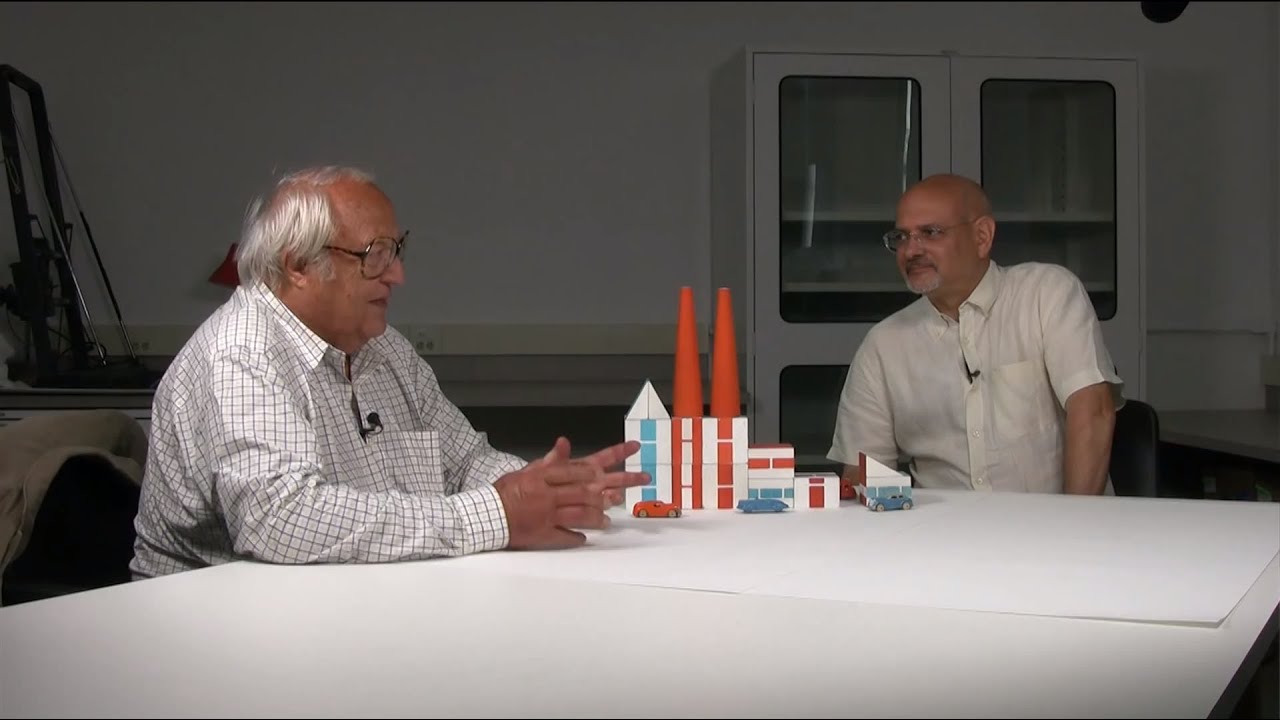
    • Starting in 1924, Sutnar designed toys consisting of simple geometric structures of animals and puppets. He attempted to introduce modern aesthetics into children's toys by developing a building kit that consisted of sawtooth roofs, cones, and pieces in the colors of red, blue, and white (this remained a prototype). He also wrote a children's book on the future of traffic in Transport: Next Half Century. Sutnar created art-oriented toys, i.e. "Apisonadora" (construction vehicle).

Strip Street

The 1960s proved to be a difficult time for the designer as he turned to publishing Strip Street (1963). It was an album of 12 erotic silk-screen prints. Sutnar organized two New York gallery exhibitions of his nudes, In Pursuit of Venus (1966) and Venus: Joy-Art (1969). These works outside of his norm still included Sutnar's hierarchical design approach as a father of modern information design. The term "posters without words" refers to Sutnar's distinct poster-like design that characterizes the individual prints of this series. Sutnar's paintings are reproduced in a 392-page monograph.

His racy Strip Street compilation has relatively been forgotten. He wrote an essay to accompany these works. "In these disturbed times of cool and alienated society," he wrote, "if the paintings can inject the feeling, the mission is accomplished." An influence of Pop is notable despite Sutnar's dislike of Pop and Pop Art.

Published Books

  • Catalog Design was a handbook by Sutnar in 1944 for trade catalogs using constructivist principles.
  • Catalog Design Progress by Sutnar and Holm solved sales and advertising problems by focusing on product information and "living standards" of all forms of information design. It was based on the idea that logical compositions would enable quick access to common information. Composed of four parts, it begins with patterns influenced by industrialization, such as street patterns and transportation. Part two features visual features of design, typography, pictures, charts, and covers. Color, shape, and size are used as tools to direct eye movement. Part three directs structural or layout features, i.e., page, catalog, and file organization. The last part is devoted to fundamental design principles: form and flow.
  • Design for Point of Sale (1952) was a survey of contemporary methods of in-store display.
  • Package Design: the Force of Visual Selling (1953)
  • Visual Design in Action (1961) argues for future advances in graphic design and defines design. This Modern design book has been compared to Tschichold's Die Neue Typographic. It was an exhibition of his work and a self-funded book.

Influence/Legacy

Although way before his time, Sutnar's methods of conveying information in a manner that evoked attention can be linked to the navigational aids of web design.

Notes

Further reading

  • Janáková, Iva, ed. (2003). Ladislav Sutnar — Praha, New York: Design in Action. Prague: Argo. ISBN 80-7101-050-2. 
  • Sutnar, Ladislav; Lönberg-Holm, Knud (1944). Catalog Design. New York: Sweet's. OCLC 4104584. 
  • Sutnar, Ladislav (1945). Shape, Line and Color. Design and Paper 19. New York: Marquardt & Company. OCLC 313411081. http://www.modernism101.com/sutnar_shape_line_color.php. 
  • Sutnar, Ladislav (10 January to 28 February 1947). "Design Exhibition". New York: The Composing Room/A-D Gallery. http://www.modernism101.com/sutnar_ad_gallery.php. 
  • Sutnar, Ladislav (1950). Transport: Next Half Century, 1951-2000. New York: Canterbury. OCLC 12331781. 
  • Sutnar, Ladislav; Lönberg-Holm, Knud (1950). Catalog Design Progress: Advancing Standards in Visual Communication. New York: Sweet's. OCLC 255421575. http://www.modernism101.com/sutnar_catalog_design_1951.php. 
  • Sutnar, Ladislav (1953). Package Design: The Force of Visual Selling. New York: Arts, Inc. OCLC 1455356. 
  • Sutnar, Ladislav (September 1956). "Commercial Symbols in Architecture". Architectural Record (120): pp. 256–261. 
  • Sutnar, Ladislav (January–February 1959). "How important is the surface to design?". Print 13 (1): p. 29. 
  • Sutnar, Ladislav (1961). Visual Design in Action: Principles, Purposes. New York: Hastings House. OCLC 2938713. http://www.modernism101.com/sutnar_visual_design.php. 
  • Sutnar, Ladislav (March 1973). "Ladislav Sutnar: Ecology and the needs for visual design". Idea 21: pp. 58–63. 
  • Sutnar, Ladislav; Funke, Jaromîr (2004) [1935]. Photography Sees the Surface [Fotografie vidî povrch]. Witkovsky, Matthew (trans.). Ann Arbor: Michigan Slavic. ISBN 0-930042-92-1. 

External links

  • Sutnar.cz
This entry has been automagically sourced from Wikipedia, the user-contributed encyclopedia. It may not have been reviewed by professional editors and is licensed under CC-BY-SA. Visit Ladislav Sutnar on Wikipedia to correct or update this entry.

If you would like to cite this person in a Wikipedia article please use the following template:

<ref name=CH>{{cite web |url=http://collection.cooperhewitt.org/people/18043523/ |title=Ladislav Sutnar |author=Smithsonian Cooper-Hewitt, National Design Museum |accessdate=20 May 2013 |publisher=Smithsonian Institution}}</ref>